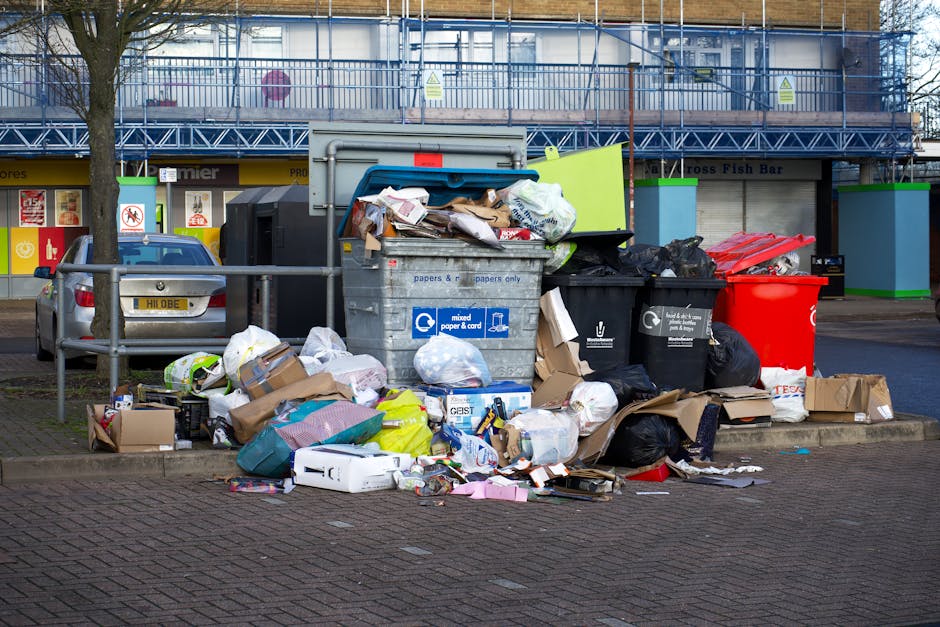
Mutton Lane bulky rubbish collection pricing explained

If you are staring at an old sofa, a broken wardrobe, or a pile of bulky bits that simply will not fit in the car, pricing can feel oddly mysterious. One minute you think it will be a quick job; the next you are comparing collection options, access charges, labour time, and disposal rules. This guide on Mutton Lane bulky rubbish collection pricing explained cuts through that confusion and shows you what usually drives the cost, what to check before booking, and how to avoid paying more than you need to.
Truth be told, most people do not need a complicated breakdown. They need a clear one. So that is what you will get here: a practical, local-friendly explanation of bulky waste pricing, how collections are normally priced, and where the hidden extras tend to creep in.
For broader service details, it can help to look at general waste removal options or the site's pricing and quotes guidance while you compare what you have in front of you.
- Why pricing clarity matters
- How bulky rubbish collection pricing works
- Benefits and practical advantages
- Who this is for
- Step-by-step guidance
- Expert tips for better results
- Common mistakes to avoid
- Tools, resources and recommendations
- Law, compliance and best practice
- Options and comparison table
- Real-world example
- Practical checklist
- Conclusion
- Frequently asked questions
Why Mutton Lane bulky rubbish collection pricing explained Matters
Bulky waste is one of those jobs that looks simple from the pavement and gets trickier once you start moving things around. A mattress leans awkwardly in a hallway. A fridge is heavier than it looks. A sofa has to get through a narrow front door, past the banister, and down a step or two. Pricing matters because those details change the amount of time, labour, vehicle space, and disposal work involved.
When pricing is explained properly, you can compare quotes on a like-for-like basis. That is the real win. Without that clarity, you may only compare the headline number and miss the extras buried in the small print. And let's face it, nobody enjoys discovering a charge that appeared only after the van turned up.
For residents and businesses near Mutton Lane, pricing clarity also helps with planning. You can decide whether to group several items into one collection, whether it makes sense to clear a whole room in one go, or whether a bigger house or furniture clearance is actually better value. If you are dealing with a broader home tidy-up, home clearance services or furniture clearance may be more suitable than a one-item pickup.
Key point: bulky rubbish pricing is usually less about the item itself and more about the combination of volume, weight, access, labour, and disposal route.
Table of Contents
- Why Mutton Lane bulky rubbish collection pricing explained Matters
- How Mutton Lane bulky rubbish collection pricing explained Works
- Key Benefits and Practical Advantages
- Who This Is For and When It Makes Sense
- Step-by-Step Guidance
- Expert Tips for Better Results
- Common Mistakes to Avoid
- Tools, Resources and Recommendations
- Law, Compliance, Standards, or Best Practice
- Options, Methods, or Comparison Table
- Case Study or Real-World Example
- Practical Checklist
- Conclusion
- Frequently Asked Questions
How Mutton Lane bulky rubbish collection pricing explained Works
Most bulky rubbish collections are priced using a mix of factors rather than a single flat figure. The collection provider will normally want to know what needs removing, roughly how much space it will take, how easy it is to collect, and whether any items need special handling.
In practical terms, the quote usually reflects some or all of the following:
- Volume: how much space the items will take in the vehicle.
- Weight: especially important for dense items like white goods, rubble, or soaked materials.
- Access: stairs, long carries, parking distance, and tight entrances can all affect the job.
- Labour: the number of people needed and the time on site.
- Disposal type: furniture, mixed rubbish, green waste, or builders' waste may all be handled differently.
- Sorting requirements: items that need separating for recycling can affect the process.
To be fair, most people only need a rough estimate at first. That is normal. A good provider will often ask for photos, item counts, and a few practical details rather than making you guess in inches and tonnes. If the job is very straightforward, pricing may feel close to a quick fixed quote. If it is messy, awkward, or spread across several rooms, the quote may need more detail.
For example, a single sofa on a ground floor with clear parking nearby is very different from a three-piece suite, a coffee table, and a broken chest of drawers on the top floor of a narrow terrace. Same broad category. Very different job.
If you want to understand how pricing relates to specific item types, the pages on furniture disposal and garage clearance can also be useful, especially where the load includes mixed household clutter.
Key Benefits and Practical Advantages
The biggest benefit of understanding bulky rubbish pricing is simple: you stay in control. But there are a few other advantages worth spelling out.
- Better budgeting: you can plan the cost before the clutter becomes urgent.
- Less waste: grouping jobs together often makes collection more efficient than booking several separate pickups.
- Faster decision-making: once you know what affects price, you can sort what to keep, donate, move, or remove.
- Lower stress: bulky items can dominate a room; getting them gone can feel like breathing room has returned.
- Cleaner outcomes: a proper collection service usually handles loading, transport, and disposal in one go.
There is also a real convenience factor. People often underestimate the physical effort involved in moving bulky items. A single wardrobe sounds manageable until you are halfway through the hallway and realise you need to rotate it three times to get past the banister. We've all seen that look - half determination, half regret.
For landlords, letting agents, and small businesses, clear pricing helps avoid delays between tenancies or during refurbishments. In those cases, services such as flat clearance or office clearance may be better suited to the scale of the job than a basic one-item uplift.
Who This Is For and When It Makes Sense
This kind of collection is for anyone who has bulky items that are too awkward, too heavy, or too many to deal with alone. That can mean homeowners, tenants, landlords, shop owners, tradespeople, and families clearing a property after a move or refurbishment.
It tends to make sense when:
- the item will not fit in a normal car or van you can access yourself;
- you need help lifting or carrying heavy furniture;
- you want several bulky items removed together;
- you are short on time and need the space cleared quickly;
- the item is too awkward to dismantle safely at home;
- you would rather have one tidy collection than several trips to a disposal point.
It also makes sense when the job is linked to a bigger clear-out. A loft, garage, and spare room often fill up at the same time, somehow. One box becomes five. Five become a mountain. Then it is Saturday afternoon and the kettle is going on again.
If that sounds familiar, a broader clearance route such as loft clearance or house clearance may give you better value than handling everything item by item.
Step-by-Step Guidance
Here is a practical way to approach bulky rubbish collection without overthinking it.
- List the items clearly. Write down what needs removing, including quantity and approximate size.
- Take a few photos. A wide shot and one close-up of the main items usually helps a lot.
- Check access. Note stairs, tight hallways, parking distance, and whether the collection point is on the ground floor or higher up.
- Separate special items. Keep aside anything that may need different handling, such as electrical items, paint, or construction materials.
- Ask for a clear quote. Make sure you understand whether the price includes loading, labour, disposal, and VAT if relevant.
- Confirm timing. Check whether the provider offers same-day, next-day, or scheduled collection.
- Prepare the area. Move smaller items out of the way so the crew can work safely and quickly.
- Review the final price before work starts. Any change should be explained plainly, not dropped in at the end like a surprise guest.
A small amount of preparation can make a noticeable difference. If the crew can reach the items easily, the job usually feels smoother and more predictable. That helps both sides.
Expert Tips for Better Results
In our experience, the best results come from being specific early. Vague descriptions lead to vague quotes, and vague quotes are where misunderstandings begin.
- Be honest about quantity: "one sofa" and "one sofa plus cushions, side tables, and a rug" are not the same job.
- Mention access issues up front: it saves time and keeps the quote realistic.
- Ask what is included: loading, transport, disposal fees, and recycling handling should all be clear.
- Combine jobs where sensible: clearing the garage and a few pieces of furniture together can sometimes be more efficient than separate bookings.
- Keep salvageable items apart: if something can be reused or donated, do not accidentally bury it under general waste.
One practical tip that often gets overlooked: measure doorways and stair turns for oversized items before collection day. Not every old wardrobe wants to leave the house gracefully. Some items need a little planning, and a bit of dismantling, otherwise they become a five-minute problem that turns into a fifty-minute one.
If your clearance is likely to involve mixed material, the wider recycling and sustainability approach is worth thinking about too. Not because it sounds virtuous on paper, but because sorting better can reduce needless disposal work.
Common Mistakes to Avoid
A few small mistakes can change a sensible quote into a frustrating one. The good news is that they are easy to avoid once you know them.
- Guessing the volume too low: underestimating items often leads to awkward price changes later.
- Forgetting access problems: a second-floor flat with no lift is not the same as a front-drive pickup.
- Not asking about exclusions: some items may be restricted or need separate handling.
- Mixing everything together: when bulky rubbish is buried in a random pile, sorting takes longer.
- Assuming every quote works the same way: one provider may price by load size, another by time, and another by item type.
Another common one: waiting until the room is so full you cannot move safely. At that point, the job becomes more awkward and occasionally a bit stressful. Nobody wants to shuffle sideways around three dead printers and a broken wardrobe door.
It is also worth being careful with anything that might qualify as hazardous or specialist waste. If you are unsure, ask before collection day rather than hoping for the best.
Tools, Resources and Recommendations
You do not need fancy tools for a bulky waste collection, but a few simple things make the process smoother.
- Phone camera: use it to photograph every item from different angles.
- Measuring tape: helpful for oversized furniture and tight access points.
- Notebook or notes app: keep a quick list of items and any questions for the provider.
- Labels or tape: useful if you are separating keep, donate, and remove piles.
- Heavy-duty gloves: sensible if you are moving smaller pieces before the crew arrives.
From a service point of view, a few nearby clearance pages may help you compare scope and pricing style before booking. For instance, furniture clearance suits household pieces, while builders waste clearance is better where the load includes renovation debris rather than domestic clutter.
If the job is business-related, business waste removal is a sensible place to compare service expectations, especially where timing and discretion matter.
Law, Compliance, Standards, or Best Practice
Bulky rubbish collection in the UK is not just about getting things out of the house. Responsible handling matters too. That means checking that waste is carried, sorted, transported, and disposed of properly. You do not need to become an expert in waste law to make a good choice, but a few best-practice points are worth keeping in mind.
First, use a provider that can explain how the waste is handled and where possible, how items are recycled or diverted from landfill. Second, be cautious with anything that may need special treatment, such as electricals, sharp materials, or contaminated items. Third, make sure you understand who is responsible once the waste leaves your property.
It is also good practice to keep a record of the job, especially for landlords and businesses. A receipt, quote, or job note can help if you need to track clearance work later. If you are managing a workplace clear-out, the health and safety policy and insurance and safety information can offer additional reassurance about how a professional service should operate.
For sensitive customer information or admin-heavy clearances, some readers also like to check payment and security and the general terms and conditions before booking. Sensible, really.
Options, Methods, or Comparison Table
There is more than one way to deal with bulky rubbish. The best option depends on item size, urgency, access, and how much effort you want to put in yourself.
| Option | Best for | Typical strengths | Possible drawbacks |
|---|---|---|---|
| Single-item collection | One sofa, mattress, appliance, or similar item | Simple, quick, easy to arrange | Can be less cost-efficient if you have several items |
| Grouped bulky waste collection | Several furniture items or a small room clear-out | Often better value than multiple small bookings | Needs clearer planning and item list |
| Full room or property clearance | Lofts, garages, flats, and whole-house clearances | Best when there is a lot to remove at once | May involve more sorting and site time |
| Self-removal | People with suitable transport and time | Direct control over timing | Manual lifting, fuel, loading, and disposal effort fall to you |
As a rule of thumb, the more awkward the access and the heavier the load, the more value you may get from a professional collection. If the item is bulky but straightforward, self-removal can work. If it is large, messy, and time-sensitive, professional help often saves hassle.
Case Study or Real-World Example
Here is a very typical local scenario. A homeowner on Mutton Lane has a worn sofa, a coffee table, a broken TV stand, and a chest of drawers that will not survive another move. None of it is hazardous, but all of it is awkward. The front hallway is narrow, parking is limited, and the sofa has one of those stubborn corners that seems specifically designed to snag on door frames.
At first glance, it looks like a small job. Then the details appear. One item is heavy. One item needs two people to lift safely. One item may need partial dismantling to come out cleanly. The quote starts to make more sense once those practical points are included.
In a case like that, a provider might price the job as a small mixed furniture collection rather than as one simple item. That is not overcharging; it is reflecting the labour and handling required. The customer usually gets a faster outcome, less risk of damage to walls or floors, and a much cleaner finish. Win-win, honestly.
If the same household also had boxes from the loft and a few pieces from the garage, combining the work into a wider clearance could improve value. That is where services like garage clearance and loft clearance start to make real sense.
Practical Checklist
Use this checklist before you request or accept a quote.
- Write down every bulky item that needs removing.
- Take clear photos in good daylight.
- Note whether the items are upstairs, downstairs, or outside.
- Measure anything oversized or hard to move.
- Check for narrow doors, stairs, parking limits, or long carries.
- Separate anything you want to keep, donate, or recycle yourself.
- Ask whether the quote includes labour and disposal.
- Confirm timing and access arrangements.
- Flag anything unusual early, including heavy white goods or mixed materials.
- Read the terms before booking so there are no surprises later.
If you are dealing with a flat, a business unit, or a mixed-use property, the same checklist still applies. The scale changes. The logic does not.
Get a free quote today and see how much you can save.
Conclusion
Mutton Lane bulky rubbish collection pricing is easiest to understand when you look beyond the headline figure and focus on the real job in front of you. Volume, weight, access, labour, and disposal method all matter. Once you see those pieces clearly, the pricing starts to feel much more logical.
The smartest approach is simple: describe the items honestly, show the access conditions, ask what is included, and compare options based on total value rather than just the cheapest number. That way, you are far less likely to run into delays, awkward extras, or avoidable stress on the day.
And if the clutter has been sitting there for a while, that is alright. These things build up. One box becomes three. One broken chair becomes a whole corner of the room. The important bit is getting it sorted, calmly and properly, so the space can start to feel like yours again.
Sometimes a clear room is just a clear room. Other times, it feels like getting your afternoon back.
Frequently Asked Questions
How is bulky rubbish collection usually priced?
It is usually priced by a mix of volume, weight, labour, access, and disposal requirements. A simple single item may be straightforward, while mixed or awkward loads often need a more detailed quote.
Why can two bulky waste quotes be so different?
Different providers may price jobs differently. One may focus on vehicle space, another on time on site, and another on item type or access. That is why it helps to compare quotes on the same description.
Is it cheaper to remove several bulky items at once?
Often, yes. Grouping items together can be more efficient than booking them separately, especially if the same crew and vehicle can handle the full load in one visit.
Do stairs and awkward access increase the price?
They can. Extra lifting, longer carries, and tight hallways usually mean more time and effort, so the quote may reflect that.
What information should I give for an accurate quote?
Give a clear list of items, photos if possible, the collection address, access details, parking notes, and any special handling concerns. The more precise you are, the better the quote tends to be.
Can I mix furniture with other types of waste?
Sometimes yes, but mixed loads can affect pricing because sorting and disposal may take longer. If your job includes a blend of furniture and general rubbish, mention that early.
Is bulky rubbish collection the same as house clearance?
Not always. Bulky rubbish collection usually covers specific large items or a smaller load, while house clearance is normally a broader service for clearing larger parts or all of a property.
What happens if my items are heavier than expected?
If the items are significantly heavier or more awkward than described, the quote may need adjusting. That is why honest item details matter from the start.
Can I ask for recycling or reuse where possible?
Yes, and it is a sensible question to ask. Many people want items sorted in a way that supports recycling and responsible disposal, especially if the load contains reusable furniture.
What should I check before agreeing to a price?
Check what the price includes, whether there are extra charges for access or lifting, when the job will happen, and how the waste will be handled after collection.
Does it help to dismantle bulky items first?
Sometimes. If safe and practical, dismantling furniture can reduce collection time and make the job easier. But do not force it if the item is unstable or likely to damage your walls or floor.
Where can I compare related clearance services?
You can look at related pages such as furniture disposal, house clearance, and waste removal to see which service fits your situation best.