House Clearance in Potters Bar

House clearance in Potters Bar should feel orderly, careful and straightforward, whether you are clearing a full property, dealing with a specific room or preparing a home for sale, letting or renovation. We provide a practical clearance service for items that need removing from houses, flats, lofts, garages and outbuildings, with a focus on sensible sorting and a tidy finish. The service is built around the contents of the property rather than a one-size-fits-all approach, so the work can be shaped to suit the rooms, access and the items involved.
Our house clearance work covers a broad mix of domestic items, including furniture, general household contents, appliances and accumulated belongings that are no longer needed. Where useful, we can separate items for reuse, recycling and disposal so the process stays efficient and responsible. Clear communication matters in this kind of work, because the best plan depends on what needs removing, what can remain in place and how the property should be left afterwards. If you are comparing options, start with the scope of the clearance and then request a quotation.
Typical choices include a complete property clearance, a partial clearance focused on selected rooms, or a careful item-by-item removal where certain possessions need to stay in the home. The right approach depends on the volume of contents, the amount of sorting required and any practical limits such as stairs, narrow access or the need to work around fixed fixtures. A well-managed clearance should reduce disruption while still leaving the property ready for its next stage.
Full and partial house clearance options
Not every house clearance needs the same level of intervention. Some customers want a full clear-out of an emptying property, while others only need particular areas addressed, such as a spare bedroom, a dining room or storage spaces that have become overfilled. We can work with either type of brief, and it is often useful to separate the items that are going, staying or requiring special handling before the clearance begins.
For many homes, a partial service is the most efficient option when only certain contents are changing. That might include unwanted furniture, boxed items, old household goods or pieces that are awkward to move without assistance. A full service is more suitable when the aim is to clear the entire property in one planned visit and leave it ready for cleaning, estate work or handover. Matching the service to the actual contents helps avoid unnecessary disturbance and keeps the job focused.
If you already know the areas that need attention, make a simple list and request a quotation. If the situation is less straightforward, a short description of the rooms and the kind of items involved is usually a good starting point. For clearances involving multiple rooms, loft storage or garage space, it often helps to group similar items together so the work can be planned more accurately.
Furniture, appliances and general household items
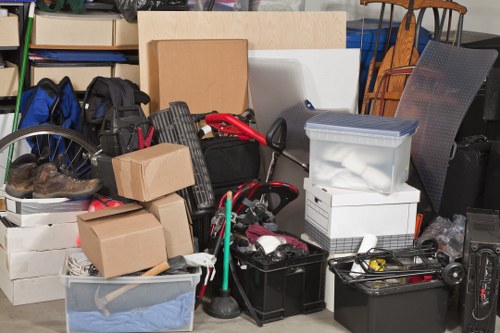
Many house clearances in Potters Bar centre on bulky household contents rather than a complete move. Sofas, wardrobes, tables, chairs, beds, white goods and miscellaneous household items can all take time to remove properly, especially where pieces need dismantling or careful handling through tight access points. We can deal with individual items or larger groups of furnishings, depending on what the property contains.
Furniture clearance is often best approached in stages: first the larger items, then the smaller pieces and loose contents, and finally any remaining material that needs sorting. This can help prevent damage to floors, walls and door frames, particularly in homes with narrow staircases or awkward layouts. When appliances are included, the clearance also needs to account for their size, weight and any connection points still in place. The practical aim is always the same: remove what is no longer wanted while keeping the property in good order.
What we can usually remove
- Domestic furniture such as sofas, beds, wardrobes and tables
- Loose household contents, boxed items and mixed room contents
- Appliances and other bulky items that need careful lifting
- Single pieces or grouped contents from more than one room
Lofts, garages and storage spaces
Storage areas often collect the widest mix of items, and they can be harder to clear than the main rooms of a house. A loft may contain boxes, old decorations, luggage and forgotten household goods, while a garage may hold tools, furniture, sports equipment and general clutter that has built up over time. These spaces usually need slower sorting and more careful access planning because of ladders, limited headroom or uneven flooring.
Our loft clearance and garage clearance services are designed for these kinds of spaces, where the work is as much about reaching the items as it is about removing them. Some storage areas contain a few large items; others are densely packed and require methodical sorting. It is often useful to decide in advance which belongings are staying and which can be taken away, especially where the area contains seasonal items, archived paperwork or objects with sentimental value. A measured approach helps keep the rest of the property undisturbed.
Where a storage area is being cleared as part of a larger house clearance, we can integrate it into the main job rather than treating it separately. That can save time and make the process more coherent, particularly if the loft or garage contains furniture that will not fit through the same route as the main rooms. Request a quotation if you want the whole property assessed as one clear plan.
How the clearance is planned

A sensible house clearance starts with the layout of the property and the nature of the contents. The amount of sorting needed, the number of rooms, the presence of stairs, and the availability of parking or loading space all influence the way the work is arranged. A property with straightforward access can usually be handled more quickly than one with narrow passages or multiple levels, but both can be managed well when the plan is clear from the start.
Price factors are generally tied to the volume of items, the amount of labour required, the access conditions and whether the job includes heavy or awkward pieces. One clear description of what needs removing is often enough to begin shaping a quotation, although photographs can be helpful if the contents are extensive or spread across several rooms. If you are able to note any items that must stay in place, that can also improve the accuracy of the plan and reduce the need for follow-up questions.
A practical way to prepare is to decide what will be cleared from each area, then group the items into broad categories rather than trying to catalogue every object. For example, you might note furniture from the lounge, general contents from the spare room, and stored items from the loft or garage. That approach keeps the enquiry simple while still giving enough detail for an informed quotation. When you are ready, ask for a quotation and we can look at the scope in a straightforward way.
House clearance for moving, letting and property changes
There are many reasons a home may need clearing, and the work often sits alongside another change in the property’s use or ownership. A landlord may need contents removed before re-letting, a homeowner may be preparing for refurbishment, or a family may need to empty selected rooms before a sale or handover. In each case, the aim is to remove unnecessary items in a controlled way so the property can move on to its next stage without avoidable delay.
Where timing matters, it helps to state the deadline and the areas that must be left untouched. A clearance planned around a property change should be practical rather than overcomplicated, focusing on the items that genuinely need to go. If any contents are fragile, valuable or intended for retention, keep them separate from the general clearance area so they are less likely to be moved by mistake. That simple preparation can make the whole process easier to manage.
For homeowners and landlords alike, the key decision is whether the job is a full clearance, a room-by-room clear-out or a targeted removal of particular items. Once that is defined, the remaining details are mainly about access, sorting and the finish required at the end. If the brief is clear, the work can be organised efficiently around it.
Recycling and responsible disposal
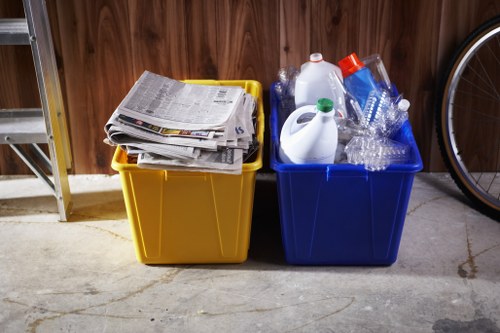
House clearance is not only about removing items from a property; it also involves deciding what should happen to them afterwards. Some contents may be suitable for reuse, some may be recyclable and some will need to be disposed of as mixed household material. A responsible clearance service should take those distinctions seriously, because different items often need different routes once they leave the property.
We approach clearances with sorting in mind, separating usable or recyclable material where practical and handling the remainder through the appropriate disposal route. That can be especially important when a property contains a wide range of household objects, from furniture and furnishings to small domestic items and outdated equipment. The cleaner the sorting process, the more orderly the result tends to be, both inside the property and afterwards. It also helps avoid unnecessary handling of items that can be dealt with more simply.
Clients often want the clearance to be handled with as little waste as possible, but it is still important to be realistic about the condition of the contents. Not everything can be reused, and some items are simply at the end of their life. The useful question is which pieces can sensibly be recovered and which should be removed through the correct disposal pathway. That judgment is part of a well-run service.
Preparing the property for clearance
Preparation for a house clearance does not need to be complicated. The most helpful step is to identify any items that must stay, especially documents, valuables, personal photographs and belongings that are still in use. Once those pieces are set aside, the remaining contents can be described more accurately and the clearance can proceed with fewer interruptions. If a room contains mixed items, a quick sort into keep and remove groups can be enough to give the work direction.
A short note about access is also useful, particularly in homes with stairs, shared entrances, narrow drives or limited loading space. If the clearance involves several rooms, it can help to say which floor each one is on and whether anything needs special handling because of weight or size. Keep the description practical rather than over-detailed: the goal is simply to give enough information for a sensible quotation and a tidy plan of work. If you are unsure, a few clear photographs can help.
Once the key details are gathered, the next step is usually to request a quotation and agree a suitable way forward. That keeps the process focused on the property itself rather than on unnecessary administration. A good clearance is built on clarity, not complication.
About Potters Bar
Potters Bar is a town in Hertfordshire, positioned just north of Greater London and closely linked to the transport corridor between the capital and the county towns to the north. Its setting gives it a distinctly edge-of-metropolitan character, with residential streets, local shopping areas and open spaces all sitting within easy reach of one another. The town grew substantially in the nineteenth and twentieth centuries, especially after the arrival of the railway, which changed its relationship with surrounding settlements and made commuting more practical. That development left a mixed built environment, where older villas and terraces sit alongside later suburban housing, schools and civic buildings. Potters Bar railway station remains a major feature of local life, while the town centre provides everyday services and a straightforward high-street pattern rather than a heavily historic core. Nearby green spaces and recreational grounds contribute to the area’s suburban identity, and the locality also has links to wider Hertsmere and the Lea Valley side of south Hertfordshire. The result is a place that feels both connected and self-contained, with a history shaped by movement, housing growth and the gradual layering of modern community life over earlier rural land.
Room-by-room clearance and final checks
Some properties are best cleared in a defined sequence rather than all at once. A room-by-room approach can be useful when the house still contains a mix of keep, remove and undecided items, or when different spaces need different levels of care. For example, living rooms may contain bulky furniture, bedrooms may have mixed personal belongings and storage rooms may require slower sorting. Breaking the work into areas helps avoid overlap and makes the overall clearance easier to follow.
Final checks matter because house clearance is as much about what remains as what leaves. Before the work is finished, it is worth confirming that anything protected, retained or set aside has stayed where it should be. If there are access routes that need clearing, or floors and surfaces that should be left tidy, those points can be addressed as part of the same organised job. A good clearance should leave a property easier to use, inspect or hand over without creating extra work afterwards.
If you have a property in Potters Bar that needs clearing, the simplest next step is to ask for a quotation and describe the spaces involved. A brief outline is enough to begin, and a clear plan can follow from there. If you prefer, you can also arrange the work around the rooms that matter most, so the service stays focused on the right parts of the home.
Why a clear quote matters

A quotation for house clearance should reflect the actual property, not a generic estimate. The more precisely the rooms, access points and item types are described, the more useful the quotation is likely to be. This matters because two houses with similar layouts can still differ greatly in the amount of sorting required, the weight of the contents or the effort needed to remove them safely. A transparent quote helps set realistic expectations from the outset.
Useful details usually include the number of rooms, the types of items involved, any awkward access, and whether the work is a full clearance or a partial one. If special care is needed for fragile items or contents that are staying, that should be made clear too. You do not need to produce a long inventory unless the property is especially complex; a concise, honest summary is usually enough to support an accurate response. That keeps the process efficient without forcing unnecessary paperwork.
When you are ready, request a quotation for house clearance in Potters Bar and we will use the information you provide to shape a practical plan. If you already know the parts of the property that need attention, include them in your enquiry; if not, start with the basics and build from there. The key is to give enough detail for the work to be matched to the home in front of us.